



Introduction: A City at the Crossroads of Heritage and Modernity
Medina — Al‑Madinah Al‑Munawwarah — is one of the most historically significant cities in the world, a spiritual center visited by millions of Muslims annually. Yet beyond its sacred identity, Medina is undergoing one of the most ambitious urban transformations in the Middle East. This transformation is not defined by skyscrapers or megaprojects alone, but by a profound shift in philosophy: a move from car‑centric planning to human‑centric urbanism.
This shift is not merely aesthetic. It is strategic, cultural, environmental, and deeply aligned with Saudi Vision 2030, which emphasizes quality of life, sustainability, and the preservation of heritage. According to recent research and government reporting, Medina’s new urban direction prioritizes walkability, public spaces, cultural identity, and environmental resilience.
Human‑centric urbanism in Medina is not a slogan — it is a comprehensive framework reshaping how people move, interact, and experience the city. It is a model that blends tradition with innovation, spirituality with modernity, and community well‑being with economic vitality.
- The Need for Human‑Centric Urbanism in Medina
1.1 The Legacy of Car‑Centric Planning
Like many Gulf cities, Medina experienced rapid urban expansion in the late 20th century. This growth was heavily shaped by car‑dependent mobility, limited public transportation, and wide arterial roads. Research shows that this model led to:
- Traffic congestion
- Air pollution
- Reduced walkability
- Fragmented public spaces
- Lower levels of social interaction
- Increased household car ownership due to cultural norms and privacy expectations
The influx of millions of pilgrims during Hajj and Umrah further strained the mobility system, revealing the limitations of a car‑first urban model.
1.2 Vision 2030 and the Quality of Life Program
Saudi Vision 2030 reframed urban development around people, culture, and sustainability. Medina became a flagship city for this shift, with initiatives such as:
- Humanizing Cities Program
- Quality of Life Program
- Heritage preservation projects
- Green space expansion
- Walkability and public realm upgrades
These programs aim to create cities that are livable, inclusive, and socially vibrant — not just efficient.
- The Core Principles of Medina’s Human‑Centric Urbanism
2.1 Walkability as a Foundation
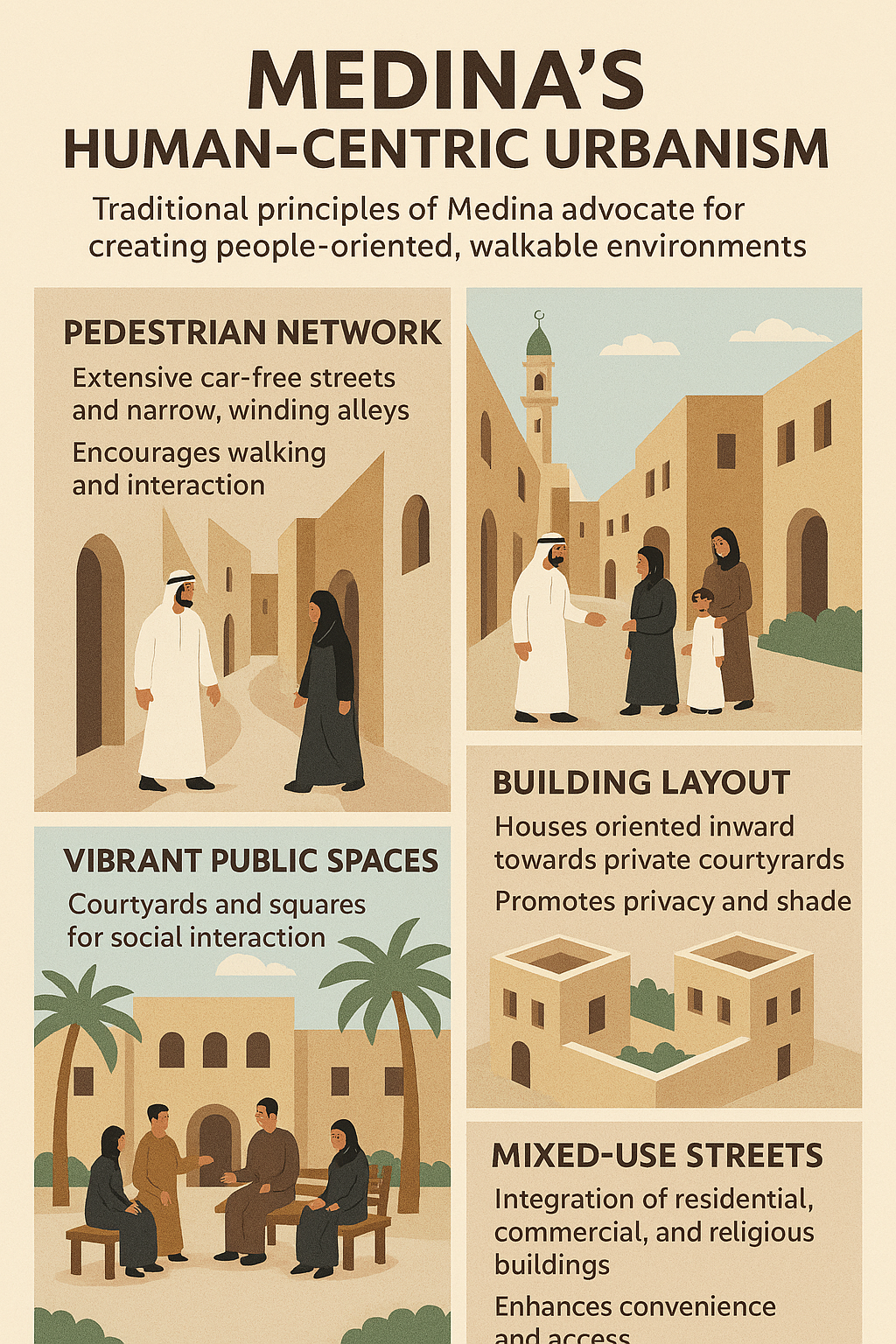
Walkability is central to Medina’s transformation. The city is redesigning streets to prioritize pedestrians through:
- Narrower lanes
- Wider sidewalks
- Shaded walkways
- Traffic calming
- Car‑free zones
- Improved accessibility to historical sites
The redesign of Quba Road, a 2.8‑kilometer corridor linking the Prophet’s Mosque to Quba Mosque, is a flagship example. It now features improved facades, greenery, pedestrian‑first design, and enhanced commercial activity.
2.2 Public Spaces as Social Infrastructure
Public spaces in Medina are being reimagined as community anchors. Research highlights the importance of:
- Courtyards
- Plazas
- Shaded gathering areas
- Playgrounds
- Community gardens
- Cultural squares
These spaces promote social interaction, physical activity, and cultural expression — all essential components of well‑being.
2.3 Heritage Preservation as Urban Identity
Medina’s human‑centric model is deeply rooted in its Islamic and cultural identity. Urban interventions aim to:
- Restore Historic Streets
- Preserve architectural character
- Enhance access to heritage sites
- Integrate traditional design elements into modern infrastructure
This approach ensures that modernization does not erase the city’s soul.
2.4 Green Urbanism and Climate Resilience
Medina’s climate demands thoughtful environmental design. The city is expanding:
- Urban greenery
- Shaded pedestrian corridors
- Heat‑resilient landscaping
- Sustainable drainage systems
These interventions reduce heat stress, improve air quality, and enhance comfort — essential for a city with millions of outdoor visitors annually.
2.5 Mixed‑Use Development for Vibrant Communities
Human‑centric urbanism encourages mixed‑use streets where residential, commercial, and religious functions coexist. This reduces travel distances, supports local businesses, and creates lively neighborhoods.
- The Humanizing Cities Initiative: A Case Study
A comprehensive study on Medina’s Humanizing Cities Initiative reveals four major themes shaping the city’s transformation:
3.1 Urban Design and Public Spaces
Residents reported significant improvements in:
- Walkability
- Access to green spaces
- Quality of public areas
- Aesthetic coherence
These upgrades directly enhance physical and mental well‑being.
3.2 Social Sustainability
Human‑centric design fosters:
- Community engagement
- Social cohesion
- Cultural expression
- Inclusivity
Public spaces become platforms for interaction rather than mere transit zones.
3.3 Economic Growth and Local Development
Improved walkability and public spaces stimulate:
- Retail activity
- Tourism
- Local entrepreneurship
- Real estate value
The Quba Road redevelopment is a prime example of how urban design can boost economic vitality.
3.4 Alignment with Vision 2030
The initiative supports national goals by:
- Enhancing quality of life
- Promoting cultural identity
- Encouraging sustainable development
- Strengthening social well‑being
- Challenges and Opportunities
4.1 Balancing Cars and Pedestrians
Despite progress, Medina still faces challenges:
- High car ownership
- Cultural preferences for private vehicles
- Limited public transit alternatives
- Seasonal surges in population during pilgrimage seasons
The city must continue expanding mobility options such as buses, shuttles, and micro‑mobility.
4.2 Ensuring Equity Across Neighborhoods
Research highlights disparities in access to:
- Green spaces
- Public amenities
- Walkable streets
Future interventions must ensure that all districts benefit equally.
4.3 Increasing Public Awareness
Some residents remain unaware of new programs or how to engage with them. Public communication and community participation will be essential.
- Medina as a Global Model for Human‑Centric Urbanism
Medina’s transformation is unique because it blends:
- Spiritual significance
- Cultural heritage
- Modern urban design
- Environmental sustainability
- Community well‑being
Few cities in the world face the same combination of challenges and opportunities. Medina’s approach — rooted in tradition yet forward‑looking — positions it as a global model for cities seeking to humanize their streets and improve quality of life.
Conclusion: A City Designed for People
Medina’s human‑centric urbanism is more than an urban planning strategy. It is a philosophy that honors the city’s sacred identity while embracing the needs of modern life. By prioritizing people over cars, culture over concrete, and well‑being over speed, Medina is redefining what a 21st‑century Islamic city can be.
Its transformation is ongoing, but the direction is clear: a city where residents and visitors can walk, gather, connect, and thrive — in harmony with heritage, environment, and community.


