



Introduction
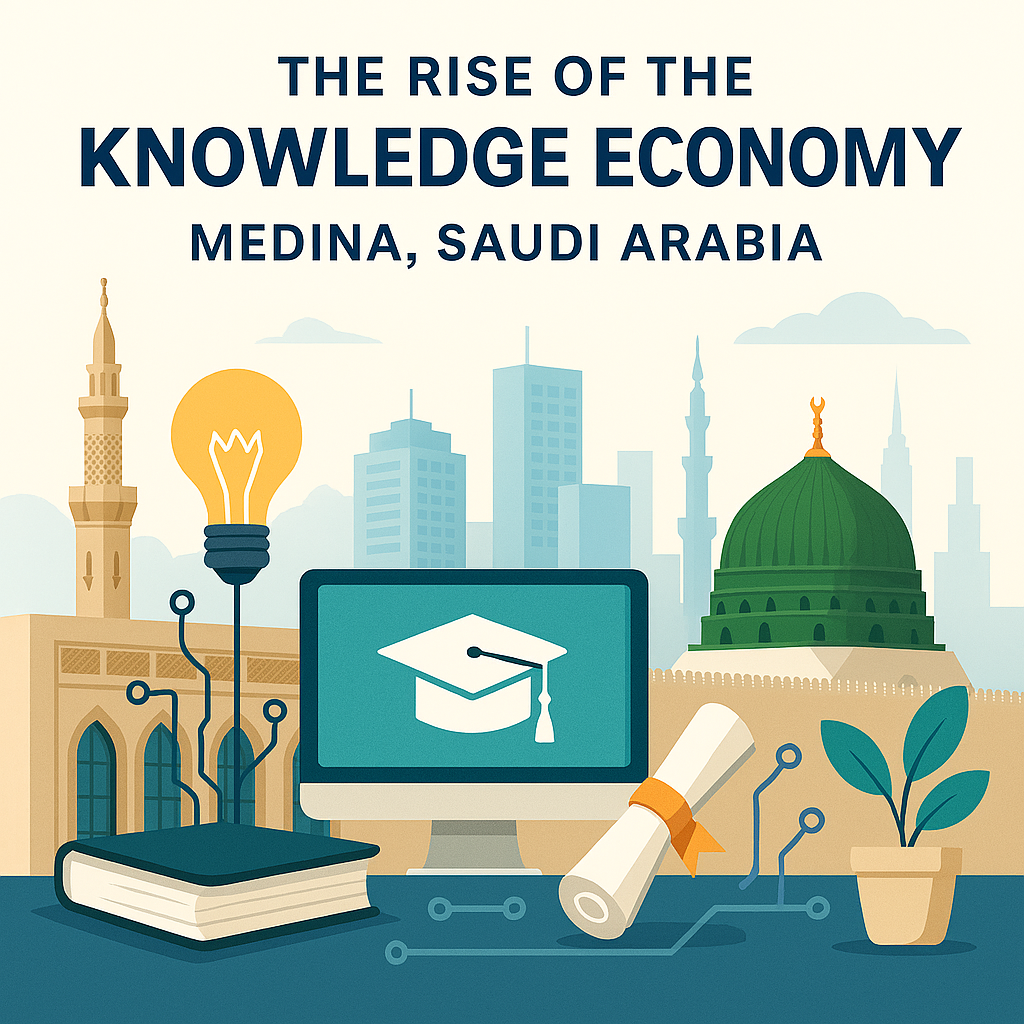
Medina, one of Islam’s holiest cities, is undergoing a profound transformation — not just in infrastructure and tourism, but in the very fabric of its economic identity. Traditionally known for its spiritual significance and religious tourism, Medina is now emerging as a regional hub for innovation, education, and digital entrepreneurship. This shift marks the rise of a knowledge economy — a system where intellectual capital, research, and technology drive growth, rather than natural resources or traditional industries.
At the heart of this evolution is the Knowledge Economic City (KEC), a visionary development aligned with Saudi Arabia’s Vision 2030. As Medina repositions itself for the future, it is blending heritage with innovation, creating a dynamic ecosystem that supports startups, research institutions, smart infrastructure, and human capital development.
What Is a Knowledge Economy?
A knowledge economy is built on the production, distribution, and use of knowledge and information. It emphasizes:
- Innovation and creativity
- Education and lifelong learning
- Digital infrastructure
- Research and development (R&D)
- Entrepreneurship and intellectual property
In Medina, this model is being localized to reflect the city’s cultural and spiritual context, while embracing global standards of competitiveness and sustainability.
Knowledge Economic City (KEC): Medina’s Innovation Engine
Launched as one of Saudi Arabia’s four economic cities, KEC spans 6.8 million square meters and is strategically located near the Haramain High-Speed Railway Station and Prince Mohammad bin Abdulaziz International Airport. It is regulated by the Economic Cities and Special Zones Authority (ECZA) and listed on the Tadawul stock exchange, with a capital of SAR 3.4 billion.
KEC’s mission is to:
- Attract strategic investment
- Create sustainable jobs
- Foster a vibrant urban lifestyle
- Position Medina as a global destination for knowledge-driven industries
Its master plan supports a future population of 150,000 residents and includes 42,000 hotel rooms, educational campuses, healthcare facilities, retail centers, and cultural venues.
Flagship Projects Driving the Knowledge Economy
- Madinah Gate
Saudi Arabia’s first transit-oriented development, Madinah Gate is integrated with the Haramain railway station. Phase one includes:
- A DoubleTree by Hilton hotel
- 22,750 sqm of retail and dining space
- A bus and taxi terminal with capacity for 780 passengers/hour
- Seamless multimodal transport connectivity
This project enhances Medina’s accessibility and supports commerce, tourism, and urban mobility.
- Multaqa Al Madinah
A vibrant lifestyle hub blending:
- Shopping and leisure
- Dining and entertainment
- A five-star Hilton hotel with 350 rooms
- 66 branded residences
- A GLA of 71,000 sqm
- Investment of SAR 2.2 billion
Multaqa is designed to attract both local and international visitors, supporting retail innovation and cultural exchange.
- Dar Al Jewar
A premium gated community offering:
- Villas and townhouses
- Shaded walkways and green spaces
- A community mosque
- Wellness and sports facilities
- Views of Mount Uhud
This development supports Medina’s vision of sustainable, high-quality urban living.
Education and Talent Development
A thriving knowledge economy depends on human capital. Medina is investing in:
- University partnerships and research centers
- Vocational training aligned with market needs
- Digital literacy programs for youth and women
- Scholarships and incubators for entrepreneurs
KEC is expected to host educational institutions focused on STEM, Islamic studies, and business innovation, creating a pipeline of skilled professionals.
Digital Infrastructure and Smart City Integration
KEC and Medina’s broader urban strategy include:
- High-speed internet and 5G networks
- Smart traffic and energy systems
- Digital twin platforms like Manarah
- E-government services
- Data-driven urban planning
These technologies enable efficient service delivery, real-time monitoring, and citizen engagement — essential for a modern knowledge economy.
Entrepreneurship and Innovation Ecosystem
Medina is nurturing a startup-friendly environment through:
- Business incubators and accelerators
- Co-working spaces and innovation hubs
- Access to venture capital and angel investors
- IP protection and regulatory support
KEC’s proximity to transport hubs and spiritual landmarks makes it ideal for startups in Islamic fintech, halal tourism, e-learning, and healthtech.
Sustainability and Cultural Integration
Unlike many tech-driven cities, Medina’s knowledge economy is deeply rooted in its cultural and spiritual identity. Projects are designed to:
- Preserve heritage sites
- Promote walkability and green spaces
- Respect religious norms and community values
- Blend traditional architecture with modern design
This approach ensures that innovation does not come at the expense of authenticity.
Challenges and Strategic Responses
Medina’s transition to a knowledge economy faces challenges:
- Talent retention in a competitive regional market
- Balancing modernization with cultural preservation
- Ensuring inclusivity for all demographics
- Attracting global investment
To address these, the city is:
- Offering incentives for investors and developers
- Promoting Medina as a destination for spiritual and intellectual tourism
- Aligning with Vision 2030’s goals for diversification and sustainability
Medina’s Role in Vision 2030
Saudi Arabia’s Vision 2030 aims to:
- Diversify the economy beyond oil
- Create 1 million jobs in emerging sectors
- Position the Kingdom as a global investment hub
Medina’s knowledge economy contributes by:
- Creating high-value jobs
- Attracting foreign direct investment (FDI)
- Enhancing urban resilience
- Promoting cultural diplomacy
KEC is a flagship example of how Vision 2030 is being localized and implemented.
Conclusion: Medina’s Knowledge Renaissance
The rise of the knowledge economy in Medina is not just an economic shift — it’s a cultural renaissance. By integrating education, innovation, and digital infrastructure into its urban fabric, Medina is redefining what it means to be a modern Islamic city.
As KEC and its surrounding projects continue to grow, Medina will stand as a beacon of how heritage and progress can coexist — offering lessons for cities across the region and the world.
Sources:
KEC Official Site
MEP Middle East – Madinah Gate Project
MECSR – Madinah’s Gateway to the Future


