



Introduction
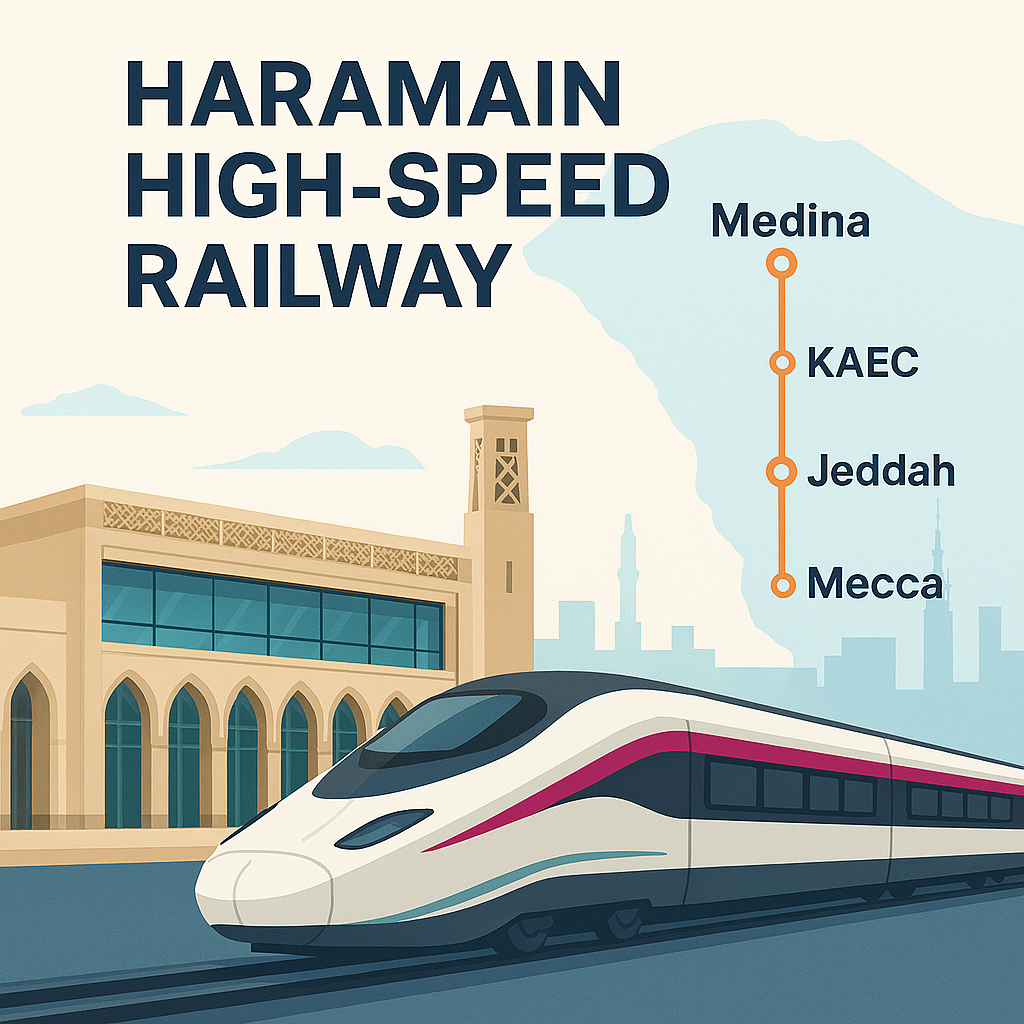
In the heart of Saudi Arabia’s western region, the city of Medina stands as a spiritual sanctuary and a symbol of Islamic heritage. Yet beyond its sacred minarets and historic streets, Medina is now a hub of futuristic mobility — thanks to the Haramain High-Speed Railway (HHR). This ambitious rail project connects Medina to Mecca, Jeddah, and King Abdullah Economic City (KAEC), revolutionizing travel for millions of pilgrims and residents alike.
Launched in 2018, the HHR is one of the most advanced high-speed rail systems in the Middle East. With trains reaching speeds of 300 km/h (186 mph), it offers a fast, safe, and comfortable alternative to road travel, especially during the intense Hajj and Umrah seasons. For Medina, the railway is more than a transport link — it’s a strategic asset aligned with Vision 2030, Saudi Arabia’s blueprint for economic diversification and urban modernization.
Historical Context and Strategic Importance
The idea of connecting Mecca and Medina via rail dates back to the early 20th century with the Hejaz Railway, a narrow-gauge line built during the Ottoman era. However, that line was short-lived and never fully realized its potential. Fast forward to the 21st century, and the Saudi government revived the vision — this time with cutting-edge technology and a broader scope.
The Haramain High-Speed Railway was conceived to:
- Facilitate religious tourism by easing access between the two holy cities
- Reduce road congestion and carbon emissions
- Support economic growth in urban centers like Jeddah and KAEC
- Enhance regional integration and mobility across the western corridor
Medina’s inclusion in the HHR network was pivotal. As the final northern terminus, it anchors the system and serves as a launchpad for millions of pilgrims arriving from across the globe.
Route and Stations
The HHR spans approximately 450 kilometers, with five main stations:
- Mecca (Al-Sulimaniyah)
- Jeddah Central Station
- King Abdulaziz International Airport (KAIA)
- King Abdullah Economic City (KAEC)
- Medina Station
Each station is a marvel of modern design, equipped with:
- Air-conditioned waiting lounges
- Prayer areas
- Retail outlets and cafes
- Digital ticketing kiosks
- Accessibility features for disabled passengers
The Medina Station, located in the city’s western outskirts, is designed to handle high passenger volumes during peak pilgrimage seasons. Its architecture blends Islamic motifs with contemporary aesthetics, creating a welcoming gateway for travelers.
Train Technology and Onboard Experience
The HHR fleet consists of Talgo 350 trains, manufactured in Spain and customized for Saudi Arabia’s climate and cultural needs. Each train includes:
- Two classes: Economy and Business
- Wi-Fi connectivity
- Power outlets and tray tables
- Clean restrooms
- Luggage racks
- Quiet cabins and snack service (in Business class)
The trains are built to withstand extreme desert temperatures and sandstorms, with reinforced air filtration systems and heat-resistant materials. Their aerodynamic design ensures smooth rides even at top speeds.
Travel time between Medina and Mecca is approximately 2.5 hours, compared to 6–7 hours by car. This efficiency is a game-changer for pilgrims, especially those with tight schedules or mobility challenges.
Impact on Pilgrimage and Religious Tourism
Medina receives over 8 million pilgrims annually, many of whom also visit Mecca during their journey. The HHR has dramatically improved the logistics of this spiritual migration by:
- Reducing travel fatigue for elderly and disabled pilgrims
- Offering safe, punctual, and air-conditioned transport
- Enabling same-day round trips between cities
- Supporting group travel and tour operators
During Hajj and Umrah seasons, the railway operates additional services to accommodate demand. Special arrangements are made for wheelchair users, families, and large delegations, ensuring inclusivity and comfort.
The seamless integration with KAIA also allows international pilgrims to land in Jeddah and immediately board a train to Medina or Mecca — streamlining the entire experience.
Economic and Urban Development
Beyond religious tourism, the HHR has catalyzed economic growth in Medina and surrounding regions. Key benefits include:
- Job Creation
- Thousands of jobs in operations, maintenance, hospitality, and logistics
- Training programs for Saudi youth in rail engineering and customer service
- Real Estate Development
- Increased demand for housing and commercial space near Medina Station
- Emergence of transit-oriented developments (TODs)
- Business Connectivity
- Faster access to Jeddah and KAEC for entrepreneurs and investors
- Enhanced supply chain efficiency for Medina’s industries
- Environmental Gains
- Reduction in car traffic and emissions
- Promotion of public transport culture
These outcomes align with Vision 2030’s goals of urban sustainability, economic diversification, and regional integration.
Challenges and Solutions
Building and operating a high-speed railway in a desert environment posed several challenges:
- Extreme heat and sandstorms required specialized train design
- Cultural sensitivities around gender segregation and prayer facilities
- Peak season surges during Hajj and Ramadan
- Integration with existing transport systems
To address these, the HHR adopted:
- Advanced cooling and filtration systems
- Separate prayer areas and family-friendly cabins
- Dynamic scheduling and ticketing algorithms
- Partnerships with taxi services and bus networks
The result is a resilient, adaptive system that meets both technical and social needs.
Future Expansion and Innovation
Saudi Arabia’s rail ambitions don’t stop with the HHR. Plans are underway to:
- Extend the network to Yanbu, Taif, and Riyadh
- Introduce freight services for cargo transport
- Deploy AI-powered scheduling and predictive maintenance
- Enhance digital ticketing and mobile app integration
Medina is expected to play a central role in these expansions, serving as a northern hub and innovation testbed. The city’s experience with the Manarah Digital Twin platform may also inform future smart rail initiatives.
User Experience and Accessibility
The HHR is designed with user convenience in mind. Key features include:
- Online booking via hhr.sa
- Multilingual signage in Arabic and English
- Wheelchair bays in Business class
- Discounts for disabled passengers
- Lost & Found services
- Parking and baggage policies
Passengers consistently praise the system’s cleanliness, punctuality, and professionalism. Whether traveling solo, with family, or in large groups, the HHR offers a stress-free journey.
Comparative Advantage
Compared to other transport modes, the HHR offers clear advantages:
| Mode | Travel Time (Medina–Mecca) | Comfort | Cost | Environmental Impact |
| HHR Train | ~2.5 hours | High | Moderate | Low |
| Bus | ~5–6 hours | Moderate | Low | Moderate |
| Private Car | ~6–7 hours | Variable | High | High |
| Air (via Jeddah) | ~4–5 hours (incl. transfers) | High | High | High |
Sources:
Conclusion: Medina on the Fast Track
The Haramain High-Speed Railway is more than steel and speed — it’s a symbol of Medina’s evolution. By linking sacred tradition with modern innovation, the HHR embodies Saudi Arabia’s vision for a connected, inclusive, and sustainable future.
For pilgrims, it’s a blessing. For residents, it’s a convenience. For the nation, it’s a milestone. And for the world, it’s a glimpse into how infrastructure can honor heritage while embracing progress.
As Medina continues to grow and transform, the Haramain Railway will remain a vital artery — carrying not just passengers, but the promise of a smarter, more mobile Arabia.
Would you like a custom infographic or digital illustration to accompany this article? I can create one showing the route map, station architecture, or train design. Just say the word!


